How to create a website for your food truck
A guide from a working vendor. I run a pizza pop-up, I built its website myself, and it has brought me bookings I would never otherwise have had.
In short, there are three ways to get one: a general website builder such as Squarespace or Wix, at about $25 a month, a designer, or a site made for vendors, such as WebPitch at $12 a month. Many vendors use a booking site instead, and this guide covers those too.
Somebody is planning a wedding, or an office party, or a 40th birthday, and they want food there. They’ve never heard of you. So they do what everyone does, and search.
One of two things comes back. Your website, with you on it and nobody else. Or a listing site with every caterer for miles around on one page, and you somewhere among them.
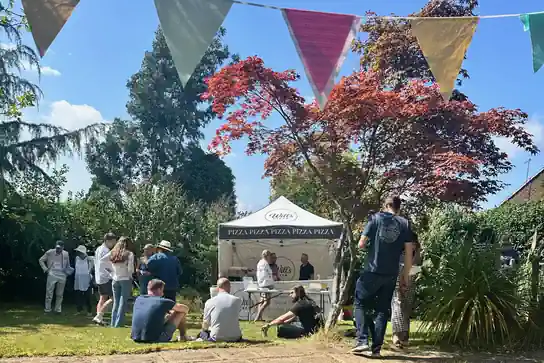
I know which I’d rather be, because I’ve seen it work. Once the site for Will’s Pizza was up, people started finding me by searching for pizza catering in the area I serve. Strangers, typing what they wanted into Google and landing on me. I’ve had bookings I would never have had without it.
So this guide isn’t going to argue about whether you need a website. I’ve done that in Does a food truck need a website? This one is about how to get one in the US, what it costs in dollars, and what to put on it. All of it applies whether you serve from a food truck, a trailer, a cart or a tent.
One thing before you read on: I make WebPitch, which is one of the options below. I’ve tried to be straight about the others, and I’ve said where I haven’t used something myself.
Ways to get a food truck website, and what they cost
There are fewer than you’d think. Prices were checked on November 22, 2026, and they are what you pay month by month.
Booking and listing sites
Plenty of vendors sign up to a booking site before they ever think about a website. Roaming Hunger is one of the best known, and Truckster, StreetFoodFinder and Best Food Trucks are others. They list trucks and send you jobs from people planning events. I haven’t used them myself. So this is how they work, not a review.
Roaming Hunger is free to join, and for catering it says you’re paid what you bid. What it keeps is the customer. In its own words: “The host pays us, we hold the payment in escrow until the event is complete, and then we pay you.” Its event coordinator is your go-to for the client’s details, the logistics and the payment. For large vending events it says there may be a booking fee and a share of revenue. I couldn’t find what the others charge, so ask before you sign up.
Use them if they bring you work. But see them for what they are. You’re one row in somebody else’s list, next to the people you’re competing with. With your own website nobody stands between you and the customer. The people who come through it are yours.
A website builder
Wix and Squarespace are the names you’ll have seen advertised. You pick a template, move things around until it looks right, and pay by the month: Squarespace from $25, Wix from about $24. A domain name is on top of that.
I’ve used website builders before. They’re capable things, but to get the most out of one you really have to know what you’re doing. Does it look right on a phone? Are your events published in a way Google can understand? Is the SEO, the work that gets you found on Google, done right? A builder gives you the tools and leaves the answers to you.
Then there’s how it looks. In practiced hands a builder turns out a professional site. In anyone else’s it tends to turn out something homemade, and customers can tell.
And none of it is made for what we do. A builder is a tool for making any website for any business. It doesn’t know what a market is. It has no idea that you’re somewhere different every Saturday, or that you have a menu, or that someone might want to book you for their 40th. You build all of that yourself, out of blank boxes.
A designer
Or you pay someone to build it for you. You’ll get something made for your business, and you won’t have to learn a builder. You’ll also pay a good deal more than any monthly price on this page, and wait while it’s built. Ask what happens afterward, when something needs changing.
WebPitch
I built my own site because nothing else did what a vendor needs. WebPitch is that site, made so any vendor can have one.
A builder doesn’t know what a market is. WebPitch does. There’s a place for where you’ll be next, a place for your menu, and a booking form for the weddings and the birthdays, all there from the start. The site is yours alone: no other vendors on the page, and no commission on anything. It looks professional on a phone, which is where your customers are, and every page is set up to be found on Google.
$12 a month, after 3 months free. Leave whenever you like.
Your site lives at yourname.webpitch.online, or on a domain name of your own from $19 a year.
What to put on it
Whichever way you go, the same few things do the work.
Say what you sell and where, in plain words. This is the one that got me those bookings. Nobody searches for “an unforgettable food experience.” They search for “pizza catering” and the name of their town. If your site says what you make and names the places you cover, in the words a customer would type, Google can match you to them. If it doesn’t, it can’t.
Say where you’ll be next. You’re somewhere different every week. Put the dates and the places on the site, and keep them right.
Show the menu, with prices. People like to choose before they reach the front of the line.
Make it easy to book you. My customers use the contact form on my site. It’s nothing clever: a form that lands in my email. But notice what happens before anyone fills it in. They look around first, and a site that looks cared for tells them they’re dealing with a professional. That is what gives someone the confidence to trust you with their wedding.
Two things the other guides leave out
Nearly every guide to food truck websites is written by a company selling a builder. The best-known ones mention neither of these.
Allergens. Federal labeling law only covers packaged food, so it doesn’t reach most of what a truck sells. But the FDA’s model Food Code says a permit holder must tell customers in writing about the major allergens in unpackaged food, and that the notice can be electronic. There are nine of them: milk, eggs, fish, shellfish, tree nuts, peanuts, wheat, soy and sesame. The code only applies where a state has adopted its 2022 version, which 14 had by the end of 2025, so the rule depends on where you are. Putting your allergens on your online menu costs nothing, and the customers who need them look before they come. I’m not a lawyer, so ask your health department what applies to you.
Your permit and your grade. Every city and county licenses mobile food vendors under its own name. In New York City it’s a Mobile Food Vending License, and in Los Angeles County a permit to operate as a Mobile Food Facility. Both also give trucks a letter grade and make them display it. Nobody makes you put either on your website. But if you’ve earned an A, why wouldn’t you?
Get a proper address
Your site needs an address, and the best one is a domain name of your own: churrohatch.com, not a long string on somebody else’s site. It’s short enough to paint on the truck and print on the boxes.
The trap is the first-year price. Registrars advertise a .com for a few dollars, then renew it at about $20 to $23 a year. None of that is unreasonable. Just look at the renewal price before you buy, because that’s the one you’ll be paying.
Help Google find you
A new website doesn’t appear in Google the day it goes up. It takes weeks, sometimes months, and that’s normal. Three things move it along.
Get linked to. Every market you sell at and every event you’ve done has a website. Ask them to link to yours. Links from real, relevant sites are a large part of how Google decides you’re worth showing.
Look into a Google Business Profile. That’s the panel with the map and the reviews beside the search results. Google allows one for a business that “travels to customers where they are”, with your address hidden and the areas you serve listed instead. Its rules don’t mention food trucks by name, and a truck with changing stops doesn’t fit them neatly, so read them before you apply.
Put the address everywhere. On the truck, the tent, the menu board and every box you hand over. The people who liked your food are the ones most likely to look you up.